



You’re Not Alone | Support for Gambling Addiction
Professional Support for Gambling Addiction, Sports Betting Problems and Compulsive Gambling
Gambling has become increasingly accessible in Nigeria through sports betting platforms, online casinos, virtual games, lottery systems, and mobile applications. While many individuals gamble recreationally without significant problems, others find themselves trapped in a cycle that becomes increasingly difficult to control. Gambling addiction can feel overwhelming, isolating, and difficult to control. Whether it started with sports betting, online casinos, or games of chance, it can quickly impact your finances, relationships, and mental health.
What may begin as occasional betting for entertainment can gradually develop into a pattern of compulsive gambling that affects finances, relationships, emotional well-being, work performance, and overall quality of life.
At 360 Psyche, we provide professional gambling addiction therapy and recovery support for individuals struggling with gambling-related problems, sports betting addiction, online gambling addiction, and compulsive gambling behaviours. Services are available in Lagos and Abuja, online across Nigeria, and for Nigerians living abroad.
Recovery is possible, and seeking help is often the first step towards regaining control.
What Is Gambling Addiction?
Gambling addiction, also known as Gambling Disorder, is a behavioural addiction characterised by persistent and recurring gambling behaviour despite negative consequences.
Individuals experiencing gambling addiction often find it difficult to stop gambling even when it causes:
- Financial problems
- Relationship difficulties
- Emotional distress
- Workplace challenges
- Academic problems
- Debt accumulation
- Loss of trust from loved ones
The urge to gamble may become overwhelming and continue despite repeated attempts to stop.
Signs You May Need Help for Gambling Addiction
You may benefit from support if you:
- Constantly think about betting or gambling
- Chase losses or gamble more to recover money
- Feel restless, anxious, or irritable when not gambling
- Hide your gambling habits from family or friends
- Experience financial strain due to betting
- Struggle to stop despite negative consequences
Behavioural Signs
- Gambling more money than intended
- Chasing losses
- Borrowing money to gamble
- Hiding gambling activities
- Spending excessive time gambling
- Neglecting responsibilities
Emotional Signs
- Anxiety when unable to gamble
- Irritability
- Guilt
- Shame
- Depression
- Emotional distress
Financial Signs
- Increasing debt
- Frequent borrowing
- Unpaid bills
- Financial instability
- Selling possessions to fund gambling
Relationship Signs
- Loss of trust
- Family conflict
- Relationship strain
- Social withdrawal
Why Do People Become Addicted to Gambling?
There is rarely a single cause.
Financial Motivation
Many individuals initially gamble hoping to improve their financial situation.
Unfortunately, repeated losses often lead to attempts to recover money through further gambling.
Emotional Escape
Gambling may temporarily distract individuals from:
- Stress
- Anxiety
- Depression
- Loneliness
- Relationship difficulties
Excitement and Reward
The anticipation associated with gambling can trigger powerful emotional responses that reinforce behaviour.
Peer Influence
Friends, social groups, workplace cultures, and social media may contribute to gambling behaviour.
Gambling Addiction Is Not About Lack of Willpower
One of the biggest misconceptions about gambling addiction is that individuals simply need more discipline or self-control.
In reality, gambling addiction is a recognised mental health condition involving psychological, emotional, and neurological processes that affect decision-making, reward systems, and impulse control.
Many individuals genuinely want to stop but struggle because gambling has become deeply connected to their emotional coping mechanisms and behavioural patterns.
Common Types of Gambling Problems
Sports Betting Addiction
Sports betting has become one of the most common forms of gambling in Nigeria.
Individuals may become preoccupied with:
- Football betting
- Basketball betting
- Tennis betting
- Virtual sports
- Live betting
The accessibility of betting apps and constant sporting events can make it difficult to disengage.
Online Gambling Addiction
Online gambling may include:
- Online casinos
- Virtual games
- Digital betting platforms
- Mobile gambling applications
The ability to gamble at any time increases the risk of problematic gambling behaviour.
Casino Gambling
Some individuals struggle with:
- Slot machines
- Card games
- Roulette
- Poker
The excitement and anticipation associated with gambling can reinforce repetitive behaviour.
Lottery and Number-Based Gambling
Frequent participation in lotteries and number prediction games may also become problematic when it interferes with financial stability and daily functioning.
Gambling Addiction Therapy in Nigeria
The growth of online betting platforms has significantly increased gambling participation across Nigeria.
Many individuals begin gambling casually before gradually developing problematic behaviours.
Common concerns reported by Nigerians include:
- Sports betting losses
- Debt accumulation
- Family conflict
- Reduced productivity
- Academic challenges
- Emotional distress
Unfortunately, many individuals delay seeking support because of shame, embarrassment, or the belief that they can stop on their own.
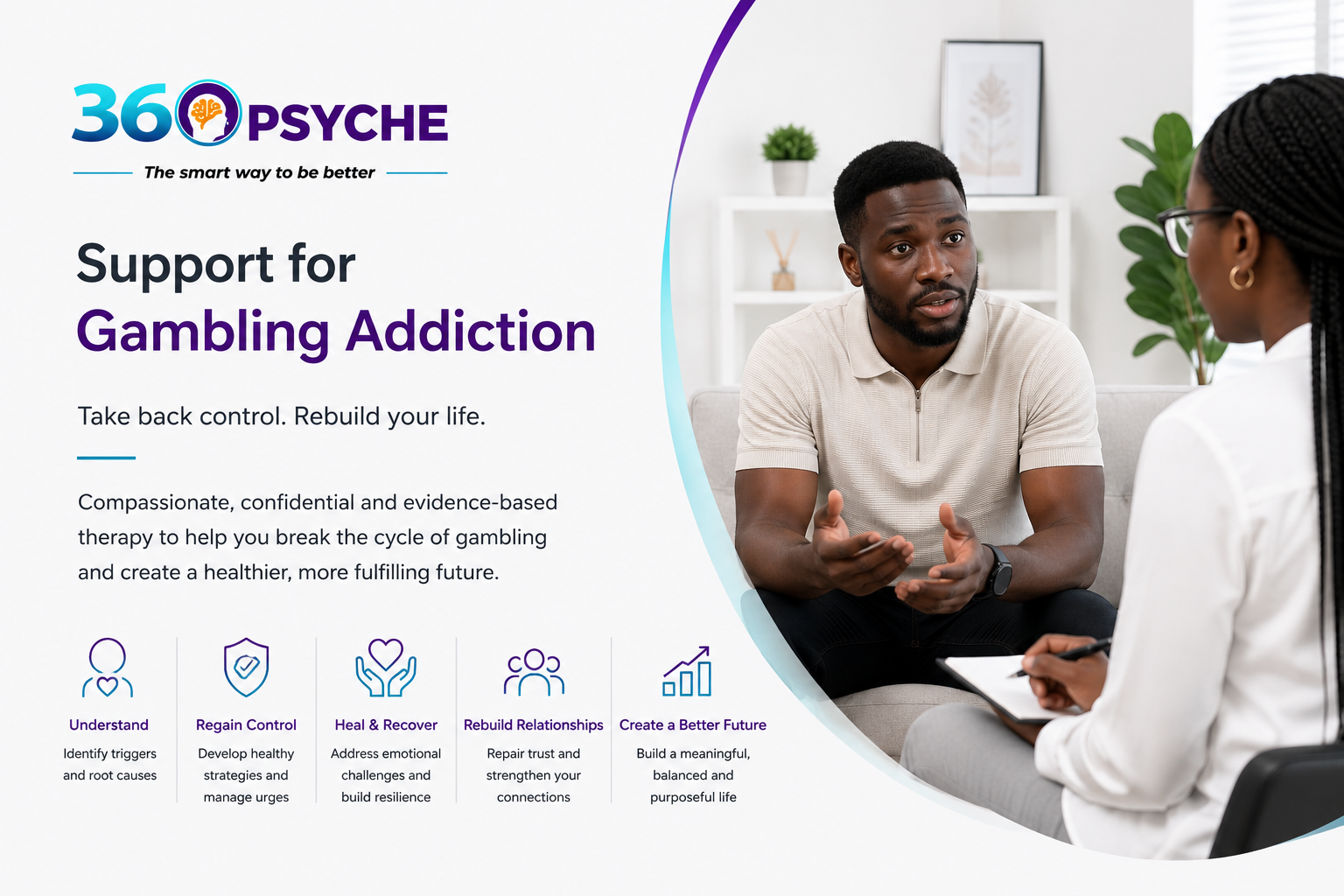
Our therapy sessions are designed to help you:
- Understand the root causes of your gambling behaviour
- Build self-control and healthier coping strategies
- Manage urges and triggers effectively
- Repair relationships affected by gambling
- Regain financial and emotional stability
We offer one-on-one confidential sessions both in Nigeria and online for Nigerians in the diaspora. We also offer group sessions, both online and physical, which are effective in treating gambling addiction.
Gambling Addiction and Mental Health
Gambling addiction often occurs alongside other mental health concerns.
These may include:
- Anxiety disorders
- Depression
- Stress-related conditions
- Trauma-related difficulties
- ADHD
- Substance use disorders
Addressing both gambling behaviour and underlying emotional factors is often essential for long-term recovery.
Gambling Addiction Therapy in Lagos and Abuja
We provide in-person gambling addiction therapy in:
Lagos
- Lekki
- Victoria Island
- Ikoyi
- Ikeja
- Surulere
- Ajah
- Maryland
- Yaba
Abuja
- Maitama
- Wuse
- Garki
- Jabi
- Apo
- Asokoro
- Gwarinpa
Online Gambling Addiction Therapy Across Nigeria
Online therapy is available for individuals living in:
- Port Harcourt
- Benin City
- Warri
- Asaba
- Enugu
- Uyo
- Calabar
- Ibadan
- Kano
- Kaduna
and throughout Nigeria.
Gambling Addiction Therapy for Nigerians Living Abroad
Many Nigerians living abroad continue to struggle with gambling-related difficulties.
Factors contributing to gambling problems may include:
- Loneliness
- Migration stress
- Financial pressures
- Social isolation
- Cultural adjustment
- Easy access to online betting platforms
We provide online support for Nigerians living in:
- Canada
- United Kingdom
- United States
- Ireland
- Germany
- Netherlands
- Australia
- United Arab Emirates
- South Africa
How Therapy Can Help
Treatment focuses on understanding the factors driving gambling behaviour and developing healthier alternatives.
Therapy may help individuals:
- Identify gambling triggers
- Manage urges and cravings
- Improve emotional regulation
- Develop healthier coping skills
- Repair relationships
- Improve financial decision-making
- Build relapse prevention strategies
Evidence-Based Approaches Used in Gambling Addiction Therapy
Cognitive Behavioural Therapy (CBT)
CBT helps individuals identify and challenge unhelpful beliefs and behaviours associated with gambling.
Motivational Interviewing
Supports individuals in exploring motivation for change and strengthening commitment to recovery.
Acceptance and Commitment Therapy (ACT)
Helps individuals develop healthier relationships with difficult thoughts and urges.
Relapse Prevention Therapy
Focuses on identifying high-risk situations and maintaining recovery over time.
Trauma-Informed Therapy
Addresses unresolved emotional experiences that may contribute to gambling behaviour.
How Do I Know If I Need Help?
You may benefit from professional support if:
- You have tried to stop, but continue gambling
- Gambling causes financial problems
- Loved ones have expressed concern
- You gamble to cope with stress or emotions
- Gambling affects work or relationships
- You feel unable to control the behaviour
What Does Recovery Look Like?
Recovery does not simply involve stopping gambling.
Recovery often includes:
- Improved emotional wellbeing
- Better financial stability
- Stronger relationships
- Greater self-awareness
- Improved confidence
- Healthier coping strategies
Every individual’s recovery journey is unique.
When Might Additional Support Be Recommended?
Some individuals may benefit from:
- Psychological assessment
- Psychiatric consultation
- Family therapy
- Financial counselling
- Support groups
A comprehensive assessment helps determine the most appropriate treatment plan.
Support for Nigerians in the Diaspora
If you’re living abroad (UK, US, Canada, etc.), gambling addiction can be even more isolating.
Our therapists understand:
- The pressure of living abroad
- Access to online betting platforms
- Financial stress and expectations back home
You can access therapy sessions online from anywhere in the world.
Why Choose 360 Psyche
- Confidential and judgment-free environment
- Experienced mental health professionals
- Culturally relevant support for Nigerians
- Flexible online and in-person sessions
- Personalised treatment approach
Book a Gambling Addiction Therapy Session
Taking the first step can be difficult, but support is available.
👉 Book a session now:
https://www.360psyche.com/service/gambling-addiction-help-nigeria
Or call/WhatsApp us to get started.
Real Stories of Healing, Recovery and Growth
⭐⭐⭐⭐⭐
A.O. – Lagos
“What started as weekend football betting gradually became something I couldn’t control. I kept convincing myself that one big win would fix everything. Instead, I found myself hiding losses from my family and borrowing money to keep betting. Therapy helped me understand why I kept chasing losses and taught me healthier ways to deal with stress and disappointment.”
⭐⭐⭐⭐⭐
E.I. – Manchester, United Kingdom
“Moving abroad was stressful and lonely at times. Gambling became a way to escape after work, but over time, it turned into a habit that affected my finances and mental health. I felt ashamed because I knew what I was doing wasn’t helping, yet I struggled to stop. Therapy helped me recognise the emotional triggers behind my gambling and develop practical strategies for managing urges. I have not only stopped gambling significantly but also improved my overall well-being.”
Frequently Asked Questions (FAQ)
Is gambling addiction treatable?
Yes, with the right therapy and support, you can regain control and build healthier habits.
Are sessions confidential?
Absolutely. Your privacy is our priority.
Can I attend sessions online?
Yes, we offer secure online sessions for clients in Nigeria and abroad.
How do I know if I’m addicted?
If gambling is affecting your finances, emotions, or relationships and you find it hard to stop, it’s a good time to seek help.
Is gambling addiction a real mental health condition?
Yes. Gambling Disorder is a recognised mental health condition that can significantly affect wellbeing and daily functioning.
Can sports betting become addictive?
Yes. Repeated betting can become problematic when it leads to loss of control, financial difficulties, or emotional distress.
Can gambling addiction be treated?
Yes. Many individuals successfully recover with appropriate professional support and treatment.
Is online therapy effective for gambling addiction?
Yes. Online therapy can provide effective and confidential support for many individuals.
Can Nigerians living abroad access therapy?
Yes. Online therapy services are available for Nigerians and Africans worldwide.
Will I need medication?
Not everyone requires medication. A psychiatric consultation may be recommended if underlying conditions such as anxiety, depression, ADHD, or other mental health concerns are present.
Related Services
- Anxiety Therapy
- Depression Therapy
- Trauma Therapy
- ADHD Assessment
- Substance Use Counselling
- Psychological Assessment
- Psychiatrist Consultation
- Online Therapy